


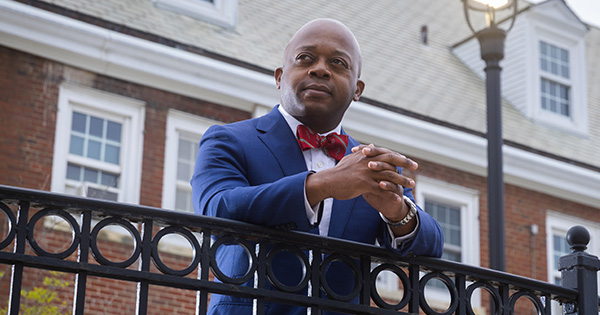
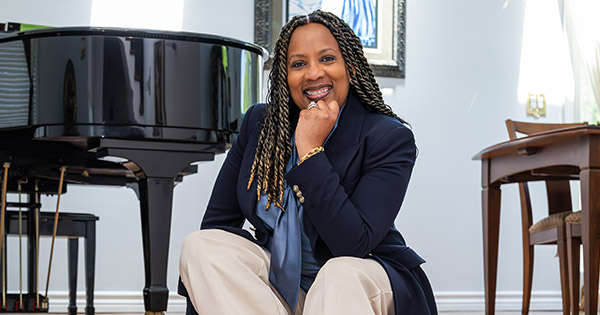

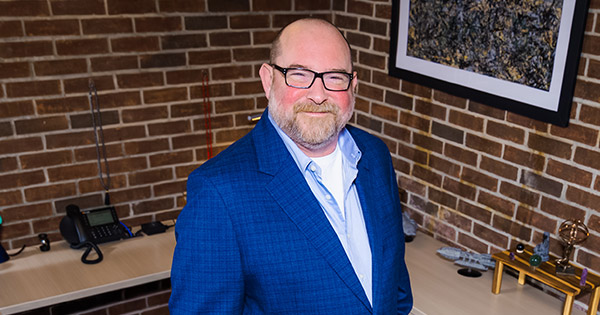
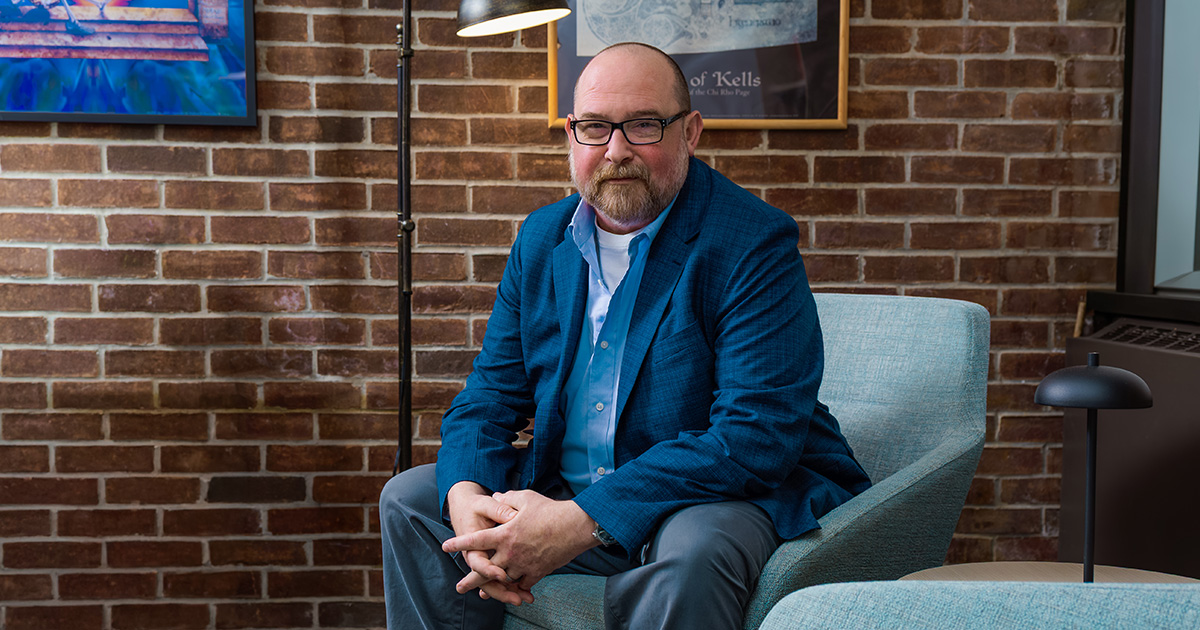
Shane Owens, PhD, never set out to work in mental health. In fact, when he graduated from high school in South Jersey, his dream was Broadway—not a counseling office. “I wanted to perform,” Owens recalls with a laugh. “But I was told by my parents that you can’t really just major in music.” So, he paired his artistic interests with psychology, a subject he’d grown to love thanks to a high school teacher who made the material come alive.
That decision—part practicality, part curiosity— would quietly shape a career dedicated to supporting students through some of their most vulnerable moments.
Owens earned his bachelor’s degree from Drew University, majoring in psychology and philosophy, with a minor in music. Philosophy, he said, taught him how to think deeply and ask better questions— skills that would later become essential in clinical work. A pivotal moment came when an advisor, who always seemed genuinely happy, shared that he was a clinical psychologist. “That stuck with me,” Owens said. “I thought, maybe that’s something I could do.” He applied to graduate programs soon after, what he now describes as a “happy accident.”
After moving to Long Island in 1997, Owens went on to earn his PhD in clinical and school psychology from Hofstra University. Today, he brings that experience to Farmingdale State College (FSC) as the director of College Mental Health Services (CMHS), where he works with college-age students navigating academic stress, personal challenges, relationships, and mental health concerns.
People sometimes think therapy must be this big, scary thing. Really, it’s about having a space to talk, to reflect, and to get support from someone who’s trained to help.
– Shane Owens, PhD
Director of Campus Mental Health Services
CMHS at FSC is staffed by three full-time psychologists, a part-time social worker, a full-time trainee, a part-time trainee, and a full-time outreach and prevention specialist, focusing on proactive education and engagement across campus. What makes the team unique, Owens explained, is the level of expertise. “Everyone here is already licensed as a mental health professional—either a mental health counselor or a social worker—and many are on their way to earning doctoral-level degrees. That means we’re advanced enough to hit the ground running.”
At a time when colleges nationwide are grappling with a mental health crisis, Owens emphasizes that FSC and the State University of New York (SUNY) are taking meaningful steps to respond. SUNY-wide policies are focused on expanding mental health programming, funding, support, and education. For example, recently, FSC received a grant to train three campus members in Mental Health First Aid, a program that teaches participants how to recognize and respond to signs of mental health crises.
“Through innovative outreach programs, which have aligned with SUNY’s focus on student mental health, students feel more empowered to communicate when they’re struggling,” said Ronald Jackson, EdD, vice president of student affairs. “Through creative techniques such as virtual reality therapy, Dr. Owens has embraced technology to improve student wellness.”
CMHS offers a wide range of services to students, including individual psychotherapy, group therapy, couples counseling, and virtual appointments. Students can call to make an appointment, and a patient portal is expected to launch soon to make access even easier. Services are available to currently registered students and are covered through the student health fee.
There are no session limits, no direct charges, and no insurance billing required. “We want to remove as many barriers as possible,” Owens said.
Importantly, CMHS staff are on call 24/7, providing direct support rather than outsourcing care. When students graduate, the team also works to connect them with appropriate referrals, so support can continue beyond FSC.
For Owens, a big part of the job is demystifying mental healthcare. “People sometimes think therapy has to be this big, scary thing,” he said. “Really, it’s about having a space to talk, to reflect, and to get support from someone who’s trained to help.”
What began as a backup plan to a Broadway dream has become a career rooted in compassion, expertise, and connection. And for the students at Farmingdale State College, Shane Owens’ “happy accident” has made all the difference.
Share This