


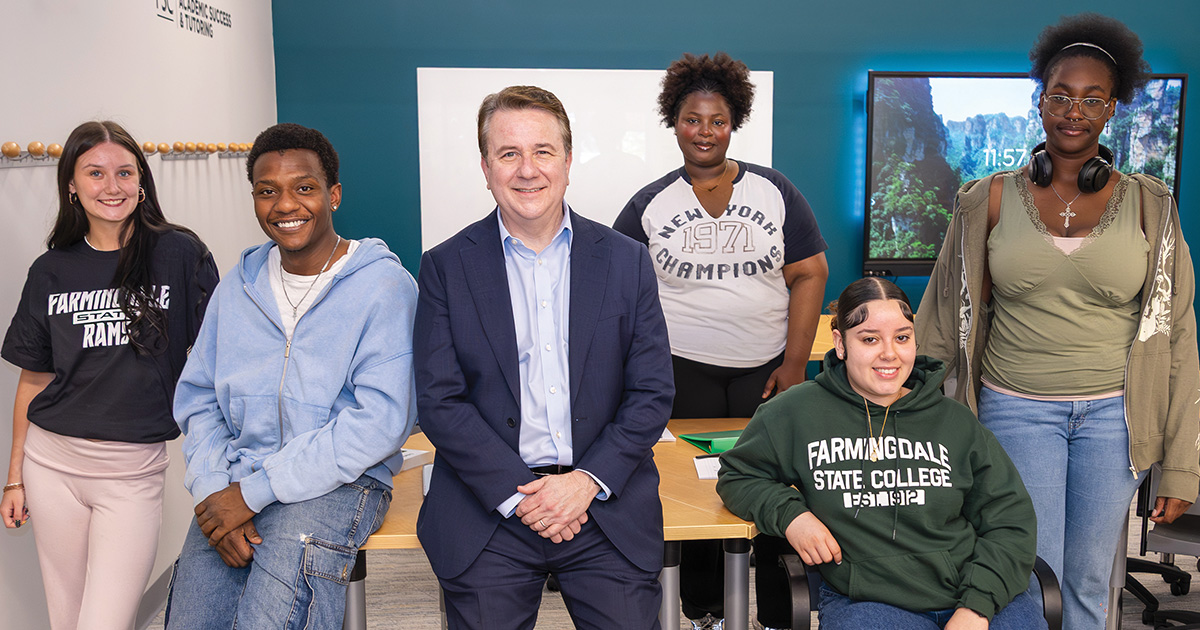
At Farmingdale State College (FSC) there’s no debate about the institutional commitment to advancing democratic engagement across campus. Led by the Office of Community and Civic Engagement (OCCE), with support from the Office of the Provost and the State University of New York (SUNY), FSC recently introduced a new initiative ensuring a campus community capable of robust, respectful discourse.
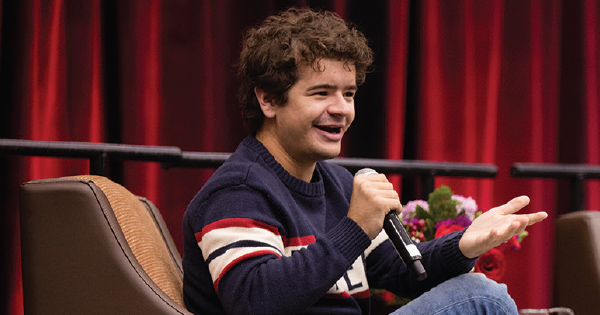
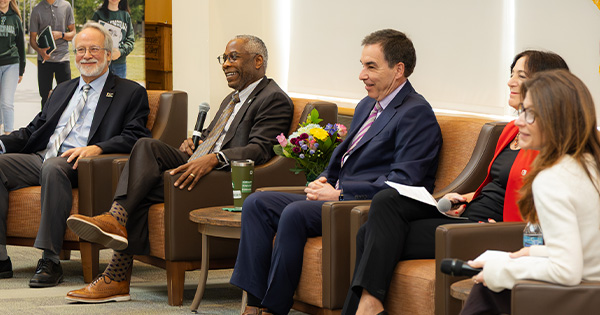
Since fall 2025, FSC’s Civic Discourse and Intellectual Square Initiative (CDISI) has hosted a series of ongoing events, including comprehensive civic discourse training for faculty and staff, interdisciplinary learning labs for students, and a dynamic panel discussion that included distinguished SUNY campus speakers.
“In an increasingly polarized world, the ability to engage in productive, respectful disagreement is a fundamental requirement for a functioning democracy and a critical competency for our students’ future success,” said Senior Vice President and Provost Sean Lane, PhD. “And as educators, we have a unique responsibility to model how to navigate differences and equip our students with the resilience and empathy to hear opposing viewpoints without retreating into conflict. To support this vital work, we are pleased to host these important opportunities designed to foster constructive dialogue in our classrooms and beyond.”
Through a partnership with the Constructive Dialogue Institute, the campus-wide professional development training helped faculty and staff explore how moral values and cognitive biases shape perspectives, gain practical tools to support civic discourse across fields and in their co-curricular settings, and learn strategies for bridging differences and facilitating healthy classroom dialogue.
“The civic discourse initiative provides something that students wouldn’t normally get from a standard lecture or textbook—an opportunity to engage with others who share differing viewpoints and perspectives from their own,” said Associate Professor of Physics Edmund Douglass, PhD, Science, Technology, & Society (STS) Department chair and CDISI committee member. “In a time of significant political polarization, we are preparing graduates to listen, reason, and contribute meaningfully and constructively to their communities.”
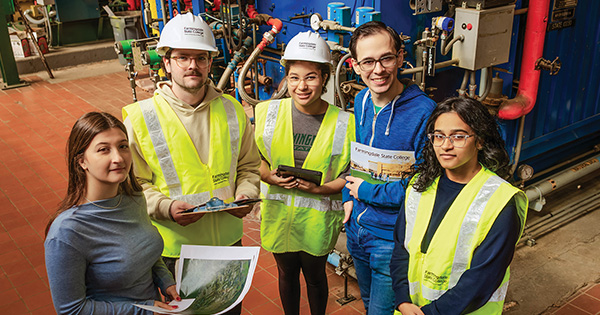
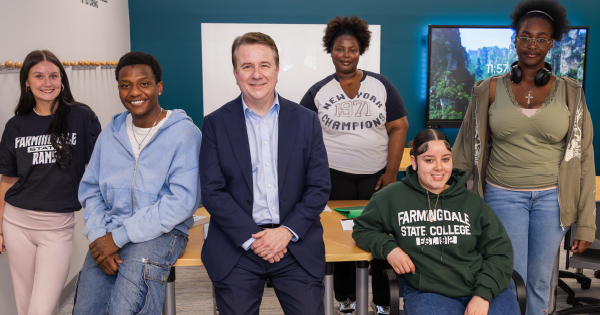
During two high-impact learning labs, students from different disciplines joined active interchanges and real-world problem-solving. For the first session, medical laboratory science students paired with STS students to examine the role of artificial intelligence in laboratory analysis, medical diagnostics, and ethical decision-making in healthcare. The second session had criminal justice students teamed up with business students to inspect the ethical, policy, and equity implications of prison privatization in the United States.
Christopher Marine, ’27, a criminal justice: police, courts, and corrections major, said he enjoyed “the thought-provoking manner of discussion,” the collaboration, and working with his group to find the totality of their perspectives. “It’s important to understand that more than one person can bring an idea to the table,” he said. “Farmingdale is a powerhouse in the region, and we do a great job of elevating every voice and pioneering initiatives that make sure everyone gets a seat at that table.”
“My experience with FSC’s civic discourse initiative has shown me how powerful it is when students feel heard and encouraged to engage in meaningful conversations,” agreed Aliyah Adnan Khan, ’26, applied mathematics and applied psychology dual-degree student and CDISI committee member. “This initiative is essential in helping students build the skills needed to engage thoughtfully with real-world complex issues and contribute positively in their communities and future careers.”
“Civic discourse infrastructure is among the most consequential work happening in higher education right now and we are proud to put that belief into action at FSC,” said Yetunde Odugbesan-Omede, PhD, OCCE director, professor of global affairs and politics, and CDISI committee chair. “Watching our faculty, staff, and students engage with practical frameworks for navigating difficult conversations has been genuinely energizing and makes clear that the ripple effect of equipping people with the right tools will reach far beyond any single workshop.”
Share This